Personal Information
Personal Introduction
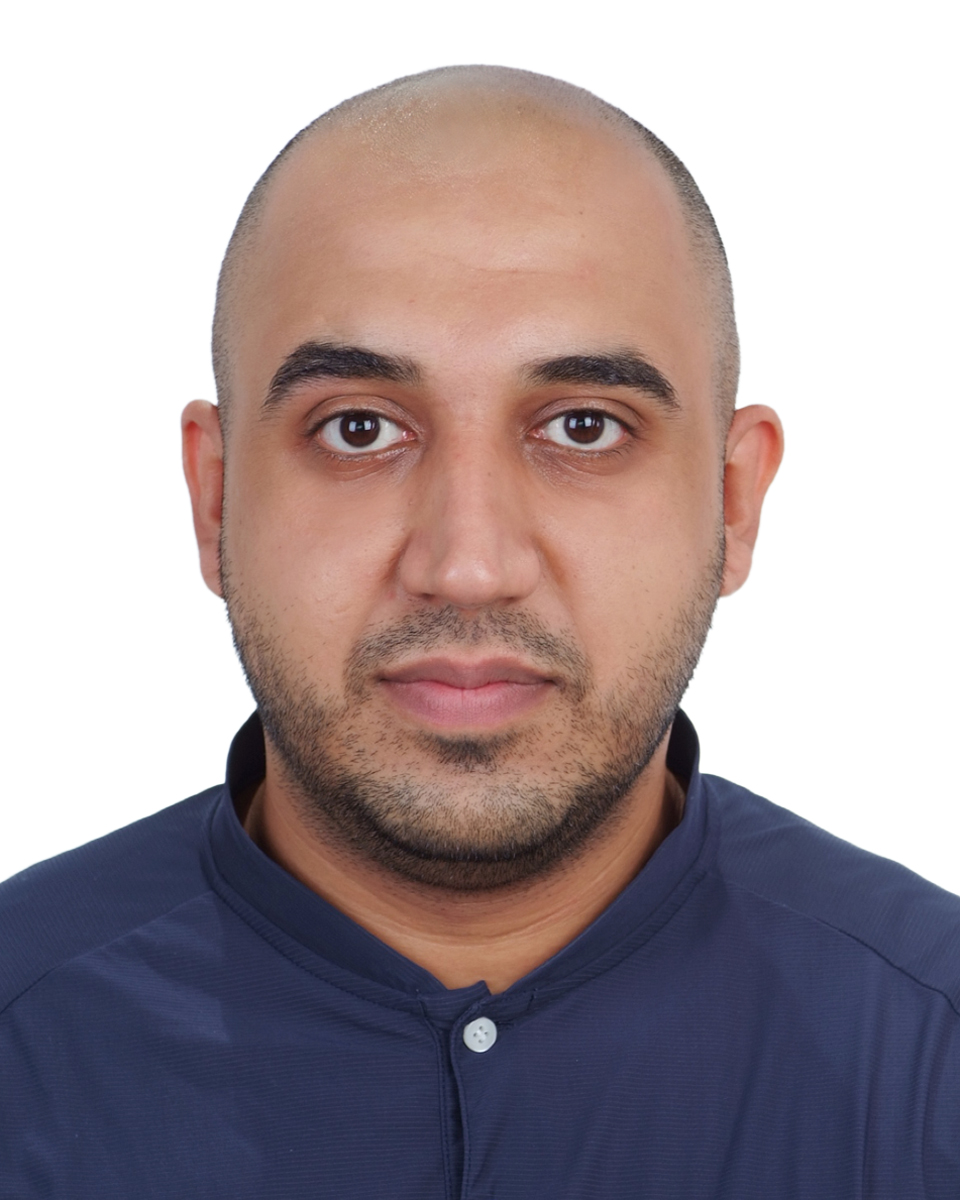
Dr. Mustafa Kadhim is an Iraqi citizen born in January 1991. He obtained his Ph.D. in 2022 from the University of Electronic Science and Technology of China (UESTC), specializing in Artificial Intelligence. He is currently a full-time Postdoctoral Researcher at the School of Informatics, Xiamen University, China. His main research focuses on applications of artificial intelligence in life sciences, particularly in the autonomous endoscopic resection of cancerous tumors in the lungs, kidneys, liver, and other organs, as well as related techniques. In addition, he works on building collaborative relationships between Xiamen University, Chinese companies, and Iraqi governmental and private institutions. Furthermore, he founded the Innovative Intelligence Center (inX) in Iraq — a center dedicated to developing unique artificial intelligence technologies tailored to the Iraqi market's needs, as well as providing studies and consultations for entities seeking to integrate AI technologies into their systems.
In 2009, he enrolled at Al-Rafidain University College and obtained a Bachelor's degree in Software Engineering. In 2013, he worked as the Director of the Software Department at New Vision Company in Iraq, while simultaneously starting his own software development project. In 2015, he joined Southwest Jiaotong University, where he earned a Master of Engineering degree in Computer Science and Technology. In 2018, he enrolled at the University of Electronic Science and Technology of China (UESTC) and obtained a Doctor of Engineering degree in Software Engineering and Artificial Intelligence. In 2023, he worked at the same university as a research scientist specializing in artificial intelligence applications. In 2025, he began working at Xiamen University as a research scientist in the field of artificial intelligence in life sciences. In the same year, he founded the Smart Innovation Center for Artificial Intelligence.
His current research focuses on integrating artificial intelligence with medical applications, including neoantigen identification, tumor biomarker prediction, flexible autonomous bronchoscopy, endoscopic navigation, and motion path optimization. In parallel, he is extensively involved in the field of machine learning and its applications, which include data clustering, data classification, anomaly detection, depression detection, deep neural networks, adversarial attacks, federated learning, knowledge graphs, large language models, as well as drone path planning and intelligent decision-making.
He has supervised and managed five Iraqi government projects, three of which are major national projects, and has also participated in several projects funded by the National Natural Science Foundation of China (NSFC). His contributions include authoring a single-authored publication titled "Self-Learning Detection Models for Data Analysis Based on Clustering", and publishing over fifteen research papers in leading international journals and conferences such as COSE, IEEE Internet of Things Journal (IoTJ), IET Communications, JKSUCIS, IJCNN, ICCWAMTIP, FedCSIS, IJMLC, FLINS, and APF. Additionally, he holds three national patents, has supervised students in scientific research, and has served as a reviewer for journals including JKSUCIS and IJCNN.
He received the First Prize at the provincial level and a Global Nomination Award in the 2023 High School Science Competition as a supervisor. He was also honored as a Graduate Supervisor of the Academic Year 2023/2024 at the University of Electronic Science and Technology of China (UESTC). Moreover, he served as the country representative at the same university from 2018/2019 to 2021/2022.
Education Background
Work Experience
Applying artificial intelligence in life sciences, particularly in the extraction and analysis of cancer tumors using autonomous endoscopy and related techniques. Building collaborations between Xiamen University and Chinese companies, and enhancing communication with Iraqi government institutions. Supervising students in their research projects and contributing to the management and acquisition of research projects funded by the National Natural Science Foundation of China (NSFC).
Leading research and development in artificial intelligence solutions, integrating hardware with advanced algorithms to improve efficiency. Managing strategic partnerships with universities and companies, mentoring students, and ensuring successful project implementation from concept to application.
Leading academic innovation and developing modern curricula in artificial intelligence, cloud computing, and the Internet of Things. Empowering students with future-ready skills, strengthening research partnerships, and supporting digital transformation in higher education.
Leading innovative research initiatives funded by NSFC, designing and implementing advanced research methodologies, and publishing scientific results in prestigious journals. Providing academic supervision for master's and doctoral students and promoting their professional development.
Guiding and training new foreign teachers and supporting them in adapting to the school environment. Providing training on teaching techniques and classroom management, developing teaching strategies, and offering feedback to enhance performance.
Analyzing client requirements, designing software, structuring databases, and managing projects. Solving technical problems and providing support and training for company staff and government departments.
Analyzing, designing, and developing an integrated system for the Forensic Medicine Department at the Iraqi Ministry of Health to manage deceased individuals' data. Organizing training courses on software design and data management.
Patents
| No. | Patent Title | Inventors | Authority / Patent No. | Date | Abstract |
|---|---|---|---|---|---|
| [1] | A Method for Mental Stress Recognition Based on Passive Domain Adaptation | Tian Ling, Kadhim Mustafa, Zhang Lizong, et al. | Sichuan: 2024110396263 | 2024-07-31 | Multi-domain method for stress recognition using ECG and physiological signals with self-supervised training. Applicable in healthcare, driving safety, and occupational monitoring. |
| [2] | A Temporal Knowledge Graph Reasoning Method Based on Historical Feature Representation Fusion | Gao Hui, Kadhim Mustafa, Lu Guangxi, et al. | Guangdong: 202411035366.2 | 2024-07-31 | Reasoning method for temporal knowledge graphs using historical subgraphs and attention mechanisms. Applications include intelligent Q&A, recommendation systems, and event prediction. |
| [3] | A Multi-UAV Data Collection Method Considering Limited Endurance | Zhou Chengkai, Kadhim Mustafa, Wang Tingqi, et al. | Guangdong: 202410855086.X | 2024-06-28 | Secure multi-UAV data collection using encrypted backups (Shamir's threshold) and reward-based movement strategies. Used in IoT sensing, disaster monitoring, and surveillance. |
National Natural Science Foundation of China Projects
| No. | Project Title | Funding Agency | Project No. | Period | Funding | Status |
|---|---|---|---|---|---|---|
| [1] | Research on Key Technologies of Federated Learning for Smart Cities | NSFC | 62372085 | 2024-01 — 2027-12 | 500,000 RMB | In Progress |
| [2] | Research on Explainable Hybrid Reasoning Technology for Knowledge Graphs | NSFC | 62376055 | 2024-01 — 2027-12 | 490,000 RMB | In Progress |
Research Publications
| No. | Title | Authors | Publisher / Conference | Year |
|---|---|---|---|---|
| [1] | Exploring the reliability of clustering models: a case study on interpretation and overlapping issues | Mustafa Kadhim, Peilin Li*, Guangxi Lu, et al. | Int. Journal of Machine Learning and Cybernetics | 2024 |
| [2] | Lightweight On-edge Clustering for Wireless AI-driven applications | Mustafa Raad Kadhim*, Guangxi Lu, Yinong Shi, et al. | IET Communications Journal | 2024 |
| [3] | Multi-UAV path planning for multiple emergency payloads delivery in natural disaster scenarios | Zarina Kutpanova, Mustafa Raad Kadhim, Xu Zheng*, et al. | Journal of Electronic Science and Technology | 2024 |
| [4] | Multi-UAVs path planning for data harvesting in adversarial scenarios | Zhou Chengkai, Kadhim Mustafa Raad Kadhim*, et al. | Computer Communications | 2024 |
| [5] | Self-learning Detection Models for Data Analysis Based on Cluster Ensemble | Kadhim Mustafa Raad Kadhim, Wenhong Tian | UESTC Press (Single-authored book) | 2024 |
| [6] | A novel self-directed learning framework for cluster ensemble | Mustafa R. Kadhim, Guangyao Zhou, Wenhong Tian* | Journal of King Saud University-CISE | 2022 |
| [7] | SentKB-BERT: Sentiment-filtered Knowledge-based Stance Detection | Chen Hongzhou, Ke Yan*, Mustafa Raad Kadhim, et al. | IJCNN | 2024 |
| [8] | A Novel Side-Information for Unsupervised Cluster Ensemble | Mustafa Raad Kadhim et al. | ICCWAMTIP | 2021 |
| [9] | A Novel Cluster Ensemble based on a Single Clustering Algorithm | Khan Tahseen, Wenhong Tian*, Mustafa R. Kadhim, et al. | FedCSIS | 2021 |
| [10] | Rapid clustering with semi-supervised ensemble density centers | Mustafa R. Kadhim, Wenhong Tian*, Tahseen Khan | ICCWAMTIP | 2019 |
| [11] | Semi-supervised cluster ensemble based on density peaks | Mustafa Kadhim et al. | FLINS Conference | 2018 |
| [12] | Comparison of Time Interval Statistic and Pulse Shape Discrimination in Fast Neutron Detection... | Al-jumaili M. A. J., ..., Mustafa R. K., et al. | Applied Physics Frontier | 2017 |
Experience in Academic Supervision of Students
| No. | Title of Work / Research | Authors / Students | Publisher / Conference | Year |
|---|---|---|---|---|
| [1] | A method for elevated ducts refinement based on convolutional neural network | Zhu, Xunyang; Ke Yan; Liquan Jiang; et al. | Radio Science | 2024 |
| [2] | Adversarial Cross-laser Attack: Effective Attack to DNNs in the Real World | Wu, Hanyu; Ke Yan; Peng Xu; et al. | 12th International Symposium on Digital Forensics and Security (ISDFS) | 2024 |
Research Under Progress
| No. | Title | Authors | Status |
|---|---|---|---|
| [1] | Hybrid Transformer-CNN U-Net For 3D Renal Artery Segmentation | Mustafa Kadhim, et al. | IEEE ICASSP — Submitted |
| [2] | Lightweight Semi-supervised Gravitational Clustering for Growing Data in Internet of Medical Things | Mustafa Kadhim, et al. | IEEE IoTJ — Under Submission |